
Updated: 15 October 2026
Information for an injection moulding quotation includes drawings or CAD files, the component’s function, materials under consideration, required quantities, and important dimensions. Include the mould’s status, appearance references, schedule, and destination city. Request a design feasibility review and agree on sample checks before production; pricing, minimum order quantities, and lead times are confirmed for each project.
What information should you prepare for an injection moulding quotation?
Start with a summary of the component’s function. Explain what the product does, how it is installed, and which areas interact with other components. Then attach a clearly identified design revision. A request for quotation, or RFQ, is easier to evaluate when the supplier receives one set of requirements rather than several different drawings with no indication of which is current.
Cave Mekar Group’s injection moulding capabilities page is a starting point for discussing plastic component requirements. This guide helps buyers prepare information; it does not determine the outcome of a project evaluation. We do not promise tolerances, capacity, pricing, or production times before discussing the design, material, and mould condition.
How should you organise information for an injection moulding quotation?
Send the model or drawings you have, together with the component name, revision number, and date. Specify the units of measurement. If the model and drawing differ, flag the questions that need resolving. Do not assume that photographs alone can replace geometry and dimensions. Photographs help explain how a component is used, while design data provides a more measurable reference.
Protolabs’ quotation guide identifies CAD files, material choices, and quantities as inputs for manufacturing discussions. This is a general reference from another manufacturer; confirm the file formats Cave Mekar accepts with our team. Their automated quotation system, pricing, and service speed are not promises about our services.
What should you explain about materials and operating conditions?
If the material has been specified, include its type and any grade information you know. If it has not, explain the functional requirements and operating conditions for discussion. Distinguish mandatory requirements from options that remain open. Do not select a resin simply because it resembles a sample product; the material must be evaluated alongside the design and actual requirements.
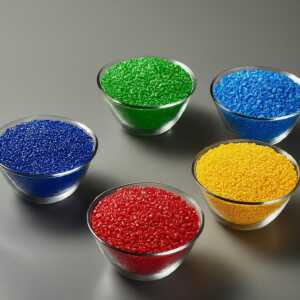
Also communicate any food-contact or other relevant requirements, together with the documents you need. A product’s colour, appearance, or shape is not evidence of certification. The pellet illustration in this article provides material context from the group’s catalogue; it is not a resin recommendation for a particular project. Material availability and suitability must be confirmed.
How should you communicate quantities and project stages?
Separate sample requirements, the initial order, and estimates for subsequent orders. Use clear units and identify which quantities are confirmed and which are estimates. Do not present a forecast as an approved purchasing commitment. This information helps define the scope without assuming production scale or supply arrangements that have not been confirmed.
Include your desired schedule and the reason for each stage, such as a fit evaluation before approval. A buyer’s schedule is a requirement to discuss, not evidence that a supplier can meet it. Ask for lead times in the actual quotation once the scope is clear. Pricing and minimum order quantities also need confirmation; do not copy the terms of another project.
| RFQ section | Buyer information | Items to confirm |
|---|---|---|
| Design | CAD files, drawings, revision, units | File formats and feasibility review |
| Function | Installation and operating conditions | Material requirements |
| Mould | Status, identification, known condition | Evaluation and scope of work |
| Dimensions | Critical features and measurement references | Tolerances and inspection methods |
| Samples | Functional and appearance criteria | Approval process |
| Order | Quantity, schedule, destination city | Price, minimum quantity, lead time, and delivery |
What should you prepare if a mould already exists?
State that a mould is available, then gather its identification details and available documentation. Explain its last known condition, the product it has made, and any problems previously observed. Separate documented information from estimates. Photographs of the mould or earlier samples can help the discussion, but do not prove that the mould is immediately compatible with the machine or the conditions of a new project.
If there is no mould yet, identify it as part of the work to discuss. Ask about the scope of evaluation, design changes, and approval before manufacture. Do not state that a mould can be used or transferred without inspection. Ownership, permission to use the design, and project responsibilities must be clear in the relevant discussions.
Which dimensions should be marked as critical?
Identify features that affect function, such as mating areas or mounting positions. Explain why each feature matters. Avoid requesting the tightest tolerances for every surface without a functional need. Protolabs’ reference on critical dimensions supports discussion of the features that matter to a component’s function.
Tolerance values, measurement methods, and actual capabilities still need to be agreed with the project team. We do not claim to use Protolabs’ inspection systems or measuring equipment. If you have a mating component, include it for evaluation. Record appearance references separately from dimensions so that dimensional inspection is not confused with visual assessment that lacks defined criteria.
How should you plan sample approval?
Before production, agree on the purpose of the sample and what will be checked. Document the functional requirements, the features to be measured, and the approved appearance references. Decide who will approve the sample and how changes will be recorded. A sample that looks suitable does not automatically prove that every requirement has been met; the decision should reflect the checks actually performed.
Keep the sample identification, design revision, confirmed material, and evaluation results together in one reference. If the design changes after approval, identify the revision and ask which features need to be checked again. This documentation helps subsequent orders use the correct requirements, without promising untested results or a particular process capability.
How do you send a brief to Cave Mekar Group?
Combine the functional summary, CAD files or drawings, quantities, material, mould status, critical dimensions, schedule, and destination city. Write down open questions so they are not mistaken for final specifications. Contact Cave Mekar Group to discuss your requirements. Cave Mekar Group comprises 5 companies and 7 factories; the scope of each project still needs confirmation.
See the group’s capabilities directory and learn about PT. Cave Sumber Berkat for context on a company within the group. Well-organised information for an injection moulding quotation helps technical discussions and comparisons of scope. The actual quotation sets the price, mould work, minimum order quantity, and delivery terms.
Frequently Asked Questions
Is a component photograph enough for a final quotation?
Photographs help, but the design, dimensions, function, material, and scope of work must be confirmed for a project evaluation.
What if the material has not been chosen?
Explain the function and operating conditions, and identify the material choice as a question for discussion.
Can an existing mould definitely be used?
No. Its identification, condition, compatibility, and evaluation scope must be confirmed before use.
Does every dimension need the tightest tolerance?
Not automatically. Identify the features that matter to function, then agree on tolerances and inspection methods.
What should be kept after sample approval?
Keep the sample identification, design revision, material, inspection criteria, evaluation results, and approval decision.
Follow us on Instagram: @cavemekargroup.
Related reading
For context on the differences between container forming processes, read CSB’s guide to thermoforming and injection moulding.