Short answer: a polymailer brief for documents should describe the packed file size, any extra protection, the closure method, and label space. A sample-package photo helps distinguish a document shipment from a shipment containing fragile items.
A “document” can mean a single sheet, a file in a folder, a bundle, or a package that also contains cards or small samples. Those forms need different space and protection. Start with the real packed item rather than the nominal paper size.
Measure the actual dispatch pack
Measure length, width, and thickness after the file is placed in its folder, inner envelope, or other protection. Note the thickest point and the fold direction where relevant. A4 or A5 alone does not define usable internal space because the closure area also uses space.
For recurring mailings, make one physical sample. Front, side, and closure photos make a specification discussion clearer. State whether the pack is hand-carried, couriered, or handled with other parcels. This is useful trial input, not a guarantee of shipping performance.
| Brief element | Record | Purpose |
|---|---|---|
| Contents | File type, folder, extra items | Shows the real pack shape. |
| Dimensions | Packed length, width, thickness | Supports an assessment of usable space and closure. |
| Protection | Corner board, card, or cushioning if used | Separates the polymailer role from added protection. |
| Closure and labels | Closure process, label position, print need | Prevents important information being covered. |
Separate the polymailer from document protection
A polymailer is flexible dispatch packaging. It does not automatically replace a rigid folder, card insert, or cushioning for contents that can bend or be damaged. If something must stay flat, state the added protection in the brief. If no added protection is used, treat that as a trial condition, not proof that every polymailer is sufficient.
Bubble wrap serves a different cushioning function. If a pack also contains a sample or accessory, identify what needs separation or cushioning. The group’s Bubble Wrap route gives relevant product context; the package still needs to be evaluated as a whole.
Define closure and label space
State whether the pack is closed once for dispatch, needs reopening, or follows an internal additional-seal process. Do not infer adhesion, security, or durability from appearance; test the closure with the intended pack and operating process. State the size and position of address, carrier, or internal labels. Use redacted sample labels so recipient data is not shared.
Run a small sample worksheet
- Pack representative files in the real order.
- Record spare space and the closure position.
- Check that labels do not cover operating information.
- Observe corners and contents after relevant internal handling.
- List points that need confirmation before routine use.
Do not change all variables at once. The worksheet supports a useful specification conversation; it is not a universal shipping test. The Polymailers page similarly asks for packed dimensions, closure and label needs, plain or printed design, quantity, and delivery context.
Route the enquiry appropriately
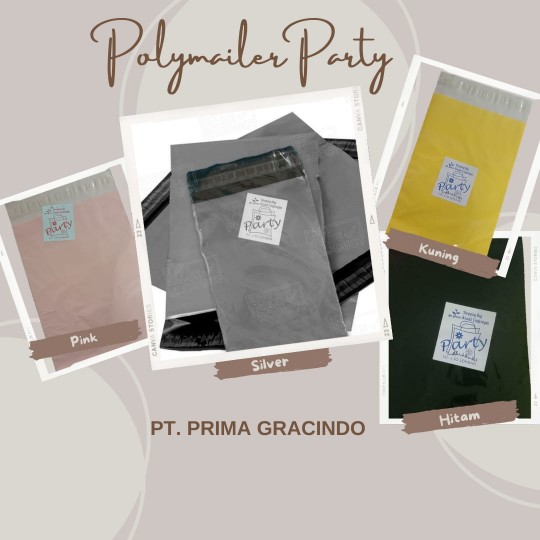
Cave Mekar Group can route a relevant enquiry. The group catalogue identifies polymailers with PT. Prima Gracindo and the Bliplastik catalogue, but that does not make every document requirement identical. Share a contents summary, redacted sample photo, packed dimensions, estimated quantity, use frequency, and destination. The team can confirm the relevant discussion route and any next sample requirement.
Do not put recipient data, contracts, or sensitive records in an article or shared photo. For special document requirements, discuss them directly with the appropriate responsible party and supplier. This is a procurement-brief guide, not compliance advice or a promise of document protection.
Frequently asked questions
Is paper size enough to select a polymailer?
No. Measure the pack after folders, protection, and extra contents are included, then allow for closure and labels.
Does a polymailer replace rigid protection?
Not automatically. State any added protection that must be trialled with the pack.
What is useful when requesting a sample?
Share a redacted sample photo, packed size, contents, closure method, estimated use, and relevant handling conditions.
Will every polymailer suit labels and printing?
Do not assume so. Define the label position and visual need, then request confirmation for the proposed variant.
When should bubble wrap be in the brief?
Include it when an item needs extra cushioning, and evaluate the full pack arrangement.