Updated: 29 October 2026
What information should you bring to discuss a standing pouch for dry tea?
Describe the leaf form, intended fill quantity, filling method, and available closure process. Bring product samples and comparison packs to assess usable space and access to the contents. Aroma protection, moisture protection, food contact, and shelf life require suitable evidence. A standing format or a zipper alone does not establish that all these needs are met.
Start with the leaves that will actually be packed
A dry tea standing pouch brief should begin with a sample of the contents. Whole leaves, cut leaves, and blends containing smaller pieces can settle differently when placed inside a pack. Identify the form you use rather than assuming that all dry tea requires the same space. If several variants are planned, separate their samples so that a single photograph does not stand in for every product.
Bring the contents in a condition representative of the proposed packing operation. Record the variant name and preparation date to prevent samples being mixed up. This information supports a discussion about the shape of the contents; it does not establish tea quality, moisture content, or storage safety. Product assessment and applicable requirements remain matters for discussion with appropriately qualified parties.
Separate fill weight from the space required
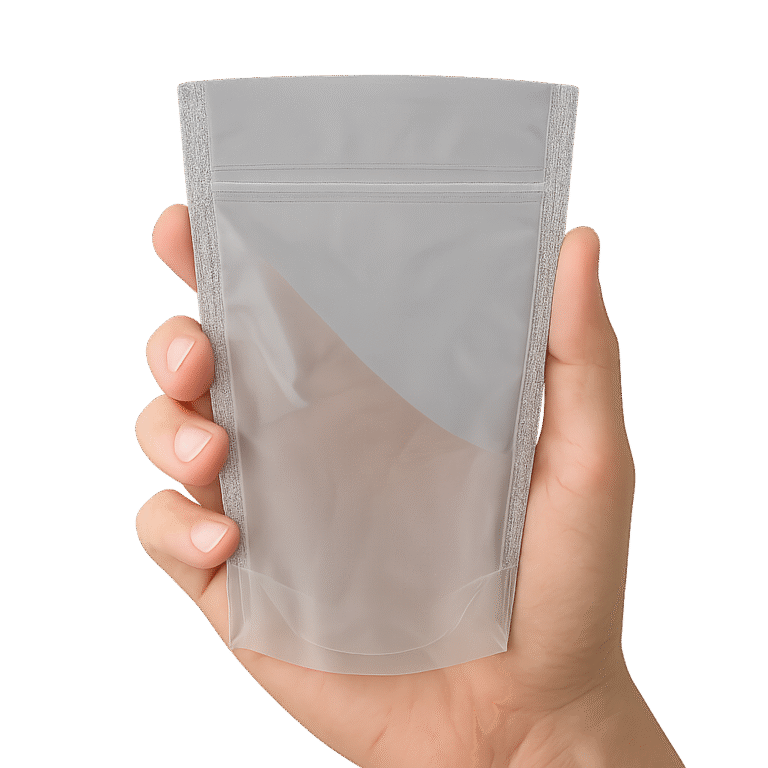
The weight planned for sale does not directly determine pouch dimensions. Leaves can occupy different volumes depending on their shape and how they are introduced. Rather than choosing a pack solely from a catalogue capacity label, try the actual contents and record the occupied space. Use weighing equipment appropriate to your own procedure so that the sample quantity remains comparable between trials.
As a hypothetical working example, two variants with the same intended weight may not reach the same fill height. This is not a packaging capacity chart. Record the trial pack width and height, the condition of its base, and the distance between the contents and closure area. Ask the supplier how external dimensions and usable space are defined for the particular sample under discussion.
Explain how the tea will enter the pouch
State whether filling is planned by hand or using equipment already available to your team. If a funnel, scoop, or filling outlet is involved, bring the dimensions of the part that enters the pack opening. A photograph of a closed pouch does not show how it behaves during filling. The supply of packaging should not be interpreted as an offer of a filling service.
Run a trial with the same tea sample and tools. Note whether leaves catch at the opening or fall around the closure area. If different equipment is used for another trial, record that change explicitly. Observations help frame questions for the supplier; they do not identify a single cause automatically or establish a guaranteed filling speed for a future production operation.
Discuss the closure area separately
Inspect the area that will be closed after filling. Record leaves near the zipper or intended sealing path so that the team can discuss how to keep that working area suitable. Do not force the contents down using an unapproved method simply to make a sample look tidy. Photographs before and after closure show what happened during the actual trial.
A zipper, when present on the selected product, and the initial closure are separate needs to describe. Ask whether the sample is compatible with the closing equipment available. This article provides no machine settings, temperatures, or seal performance guarantees. Parameters and inspection methods should follow the actual material, equipment, and recommendations confirmed for the chosen packaging item.
Try opening and removing tea as a user would
A buyer may first see the pouch standing upright, but a user needs to open it and remove the leaves. Use a filled sample to try that sequence. Record the space available for a hand or scoop, leaves remaining in corners, and the way the closure can be used again. An empty pouch alone does not demonstrate convenient access to a filled pack.
If the contents will be used in several portions, explain that scenario at the beginning of the discussion. The way users remove tea can inform questions about the opening and instructions. However, the ability to close a pack again does not prove shelf life after opening. Storage claims still need evidence appropriate to the tea, conditions, and selected pack.
Separate appearance from protection evidence
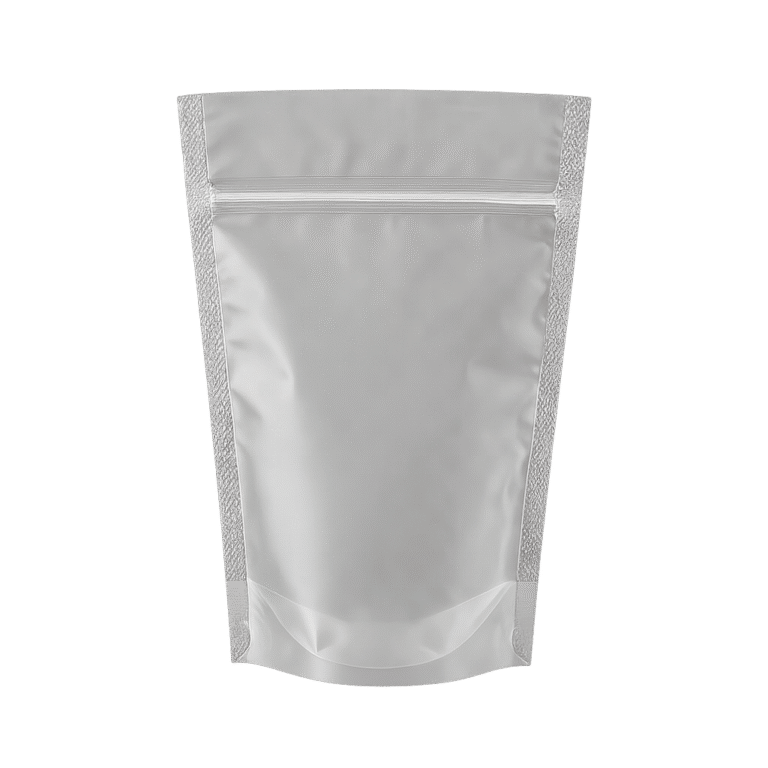
A clear panel, metallic appearance, or standing shape does not establish aroma or moisture protection. Describe what you want evaluated, along with intended distribution and storage conditions. Request material structure information and relevant evidence for the item actually being offered, rather than borrowing information from a different pack that looks similar in an online photograph.
Likewise, food contact suitability cannot be inferred from tea appearing in a promotional image. Material identity, documentation, and limits of use need confirmation. Avoid placing a shelf life statement on sales material until its basis is clear. This guide helps organise purchasing questions; it does not replace food assessment or packaging tests for a particular product.
Use a brief that the supplier can answer clearly
Prepare a one page summary covering the tea variant, leaf form, intended weight, filling method, and closure process. Add photographs of the contents and trial pack carrying the same sample identity. Where information is unknown, write an open question. Estimated figures should be labelled so that they cannot be mistaken for an agreed purchase specification.
Separate presentation requirements from function as well. Label space, information that must remain readable, and the proposed outer pack can be discussed once usable fill space is understood. Mark artwork as provisional if it is not final. A change to label dimensions or layout does not automatically resolve filling difficulties; each observation should have its own follow-up decision.
What can be decided after a trial?
After trying the filling operation, record decisions that can actually be supported by the sample. The team might approve the way leaves are introduced into the trial dimensions while still requesting material assessment for protection needs. Do not merge those two decisions into approval of the whole package. Separate notes make it easier to ask for a response on each unresolved requirement.
If the pouch choice changes, repeat affected checks. A different opening can change how leaves enter, while a changed closure area can alter usable space. Keep photographs and examples with the version number so that results from different designs are not compared as though they came from one unchanged sample.
Start with the relevant product page
The Cave Mekar Group standing pouch page provides product context for an initial conversation. Use physical samples to discuss the particular needs of your tea. Explore the group product directory and Bliplastik catalogue for wider context. A product category appearing in a catalogue does not promise every size or material structure.
Cave Mekar Group comprises five companies and seven plants according to owner-confirmed facts. The scope of an offer still depends on the actual enquiry. Confirm price, minimum quantity, availability, documentation, and delivery with the team. Save the discussion as a new brief version so that an older sample is not reused for requirements that have changed.
| Brief information | Record |
|---|---|
| Contents / form | Actual example and version identity |
| Use | Proposed handling sequence |
| Dimensions | Units and measured areas |
| Decisions | Open questions and unapproved limits |
Follow us on Instagram: @cavemekargroup.
Frequently Asked Questions
Does tea weight directly determine pouch size?
No. Leaf form and filling method affect the space required. Compare actual contents using packaging samples.
Does a zipper guarantee tea aroma protection?
No. Aroma and moisture protection require a discussion of materials and relevant evidence.
What should be brought for a filling trial?
Bring a tea sample, intended quantity, the filling tools used, and identified comparison packaging.
Does a pouch image prove food contact suitability?
No. Confirm material, documentation, and limits of use for the item actually being offered.
Is filling service automatically included with a pouch offer?
Do not assume so. Separate packaging requirements from filling services and confirm the scope.