Updated: 5 November 2026
What differs between polymailers and shopping bags in a business brief?
Explain whether the packaging is for dispatching parcels or carrying purchases from a shop. Record the goods after protection is added, closure needs, handles, labels, and handover steps. One business may need two different packages. Discuss samples with the relevant product team; a mailing bag is not cushioning, and handles alone do not constitute a parcel closure system.
Start with two journeys for the goods
Polymailers and shopping bags may appear on the same business purchasing list, but the journeys of the goods should be described separately. A purchase handed over at a counter follows a different route from a parcel handed to a carrier. At group level, we help connect those requirements with relevant product categories. This article concerns a two-channel brief rather than replacing detailed sizing guidance or a product quotation. Do not choose packaging merely because both options are bags. First describe who carries the goods, the handover steps, and what needs confirmation through samples.
Map the counter handover
For in-store purchases, record the goods commonly carried together and how staff arrange them. Explain whether the items already have individual packaging, any projecting features, and their orientation while carried. Record handles as a functional requirement rather than assuming a load capacity. If customers buy several product types, use a representative arrangement. A single photograph of a filled bag does not prove suitability for every combination. Ask the product team to discuss samples and dimensions against actual goods while leaving detailed size guidance with the relevant product owner and its existing guidance.
Map the handover to the carrier
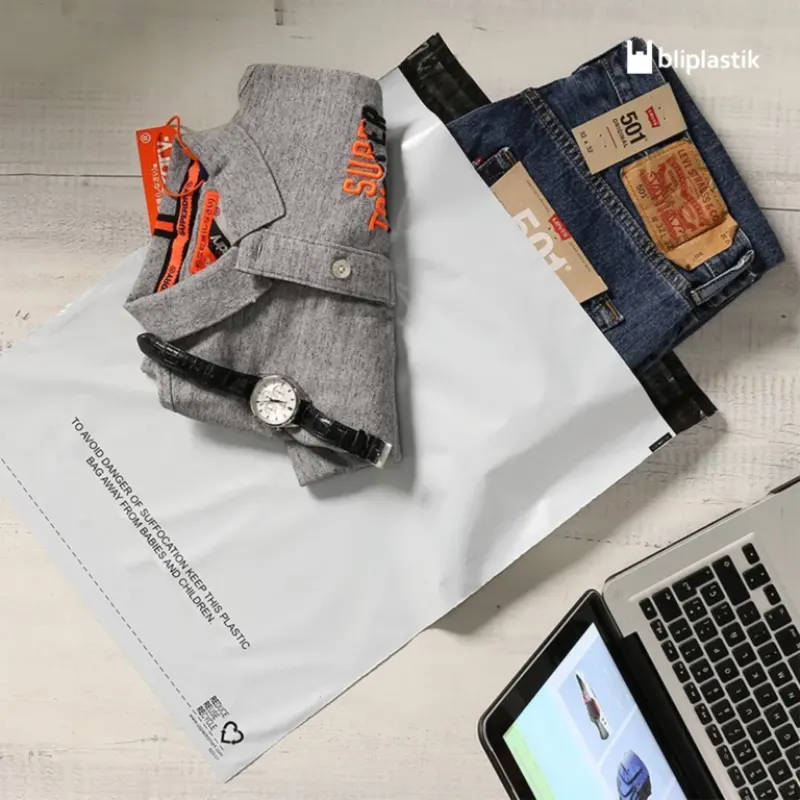
For dispatched orders, describe the goods after the planned wrapping or protection has been applied. Record the steps before handover, including closure and labelling. Do not measure clothing or another product before folding and packing if the packed form is what enters the mailing bag. Carrier requirements need checking with the appropriate party rather than guessing from shop habits. A polymailer does not automatically replace a box, cushioning, or special protection needed by the goods. The final choice must consider the actual product and a discussion of its intended use with the relevant supplier.
Separate closure requirements from handles
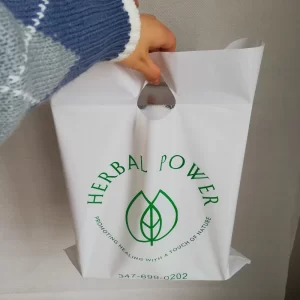
Create a closure field for the dispatch workflow and a handle field for the carrying workflow. If an application requires both, explain each function and confirm available options. Do not treat handles as a parcel closure system. Equally, an adhesive closure does not automatically make a bag comfortable to carry by hand. Examine the sample shape and how staff use it, then record visible findings. This discussion makes no claim about adhesive strength, water resistance, or any particular load capacity. Such claims require evidence appropriate to the actual product and requirement being considered.
Measure after agreeing the arrangement
Decide the arrangement of goods before discussing packaging dimensions. For dispatch, include wrapping or protection that will actually be used. For counter purchases, show product orientation and the space needed to use handles. Record units and the measurement method so two suppliers receive the same information. Do not copy a shopping-bag width into a polymailer specification without trying the packed goods. If dimensions have not been selected, mark them as a sample question. This article provides no universal size, kilogram-capacity table, or fit guarantee for every possible product or order combination.
Treat the label as a separate requirement
The dispatch workflow generally involves parcel identification. The brief should state the label position under discussion without using real recipient details in public examples. Describe the surface and application stage, and identify who checks readability. In a shop, information needs may differ, such as a business identity within the bag design. Do not confuse a shipping label with printed artwork. Retain an example without personal data for discussion. Label suitability, adhesive, and reading equipment need evaluation for the intended use rather than conclusions drawn from promotional photographs or the colour of a bag material.
A hypothetical two-channel clothing shop
Hypothetical example: a clothing shop serves counter purchases and online orders. Brief A describes folded clothing carried by the customer, focusing on the arrangement of goods and handle use. Brief B describes the online parcel after planned protection has been added, then records closure and label needs. Quantities and dimensions need not match between the two. The shop retains separate samples and records so staff do not substitute one bag simply because the other runs out. This example explains a workflow; it is neither a customer testimonial nor a recommendation for a particular product specification.
Use different references and storage locations
Use internal references distinguishing carrying bags from mailing bags, then explain them in the purchasing list. Label storage locations so new staff can find the appropriate product. If several sizes or artwork revisions exist, add traceable identity rather than relying only on colour. Record who received and checked each sample. This simple control helps communication between teams but cannot guarantee that errors will never occur. When a substitute package is proposed, compare it against the requirements of the same workflow before approval rather than judging only from a similar external appearance.
Separate quantities and required dates
Record each workflow requirement in clear units and distinguish estimates from approved orders. Use your own business records to discuss quantities; do not predict a sales surge without evidence. Discuss sample-approval timing, confirmed production information, and delivery with the supplier in the actual quotation. If artwork changes, identify the version applicable to each bag type. Price, minimum order, stock, and timing cannot be inferred from an article. A two-workflow list helps prevent dispatch requirements from disappearing inside one combined figure that describes only the total number of bags being considered for purchase.
Record sample observations by workflow
For the carrying sample, document insertion of goods, final arrangement, and handle use under an agreed scenario. For the dispatch sample, record contents, closure, label, and handover. Separate observations from conclusions and identify aspects not evaluated. One trial is not a guarantee for every parcel journey or shopping combination. If a result differs from expectations, retain photographs and sample references for further discussion. Do not change several elements together and then assert that one change solved the problem. Assessment needs to preserve the context of the actual goods and operational process.
Use product pages to direct the discussion
The Cave Mekar Group polymailer and plastic shopping-bag pages help readers identify the relevant categories. For ordering requirements and product details, continue through the Bliplastik catalogue or the appropriate product team; retail bag needs can be discussed with Mekar Plastik according to the product type. This division keeps specifications with the expertise owner while the group article helps readers describe cross-channel requirements. Send two separate briefs, include photographs without personal information, and request confirmation of sample options. Do not assume that every variation is available before the relevant team provides current information.
| Part | Brief information |
|---|---|
| Counter carrying | Goods arrangement and handle needs |
| Parcel dispatch | Protected contents, closure, label |
| Approval | Samples and revisions for each workflow |
Category references and discussion: Group polymailer category; Group shopping bag category; Mekar Plastik products.
Frequently Asked Questions
Does a polymailer replace product protection?
Not automatically. Protection depends on the actual goods and dispatch workflow.
Are handles sufficient to close a parcel?
Do not treat handles as a parcel closure system; describe closure needs separately.
Are carrying and mailing bag dimensions always identical?
No. Measure the goods for each workflow and confirm through samples.
What belongs in a two-channel brief?
Record packed contents, dimensions, closure, handles, labels, quantities, and approval status.
Does this example guarantee water resistance or capacity?
No. Performance claims need evidence appropriate to the product and requirement.
Follow the group on Instagram: @cavemekargroup.