Updated: 3 November 2026
What distinguishes packaged-water cups from beverage cups?
Describe the contents, filling method, closure system, and how the product reaches its customer before choosing a cup. Check the rim dimensions, closure shape, and process requirements using the correct samples. Matching capacity does not establish interchangeability. Material suitability, equipment compatibility, relevant documents, and the final order specification require confirmation with the appropriate supplier team.
Start with the two use sequences
A cup for packaged drinking water and a beverage cup filled when a customer orders may follow different sequences. Write down your own sequence: filling, closing, movement, and opening. A category name cannot replace that description. Similar photographs do not establish that cups work with the closures or equipment already in use. This guide separates selection questions; it does not set drinking-water production standards or approve food-contact use. The technical team still needs to examine a complete sample against the stated conditions, including any requirements that remain undecided.
Clarify what the volume means
Record the serving volume you need separately from any capacity printed in a catalogue. Ask what the supplier's figure represents before comparing two options. Space near the closure, wall shape, and presentation are separate questions. Do not increase or reduce the stated volume using a photographic estimate. Mark missing information as unconfirmed. The purpose of the note is to communicate the buyer's requirement, rather than establish a filling line or claim the capacity of an option that has not been checked against the correct documents and sample.
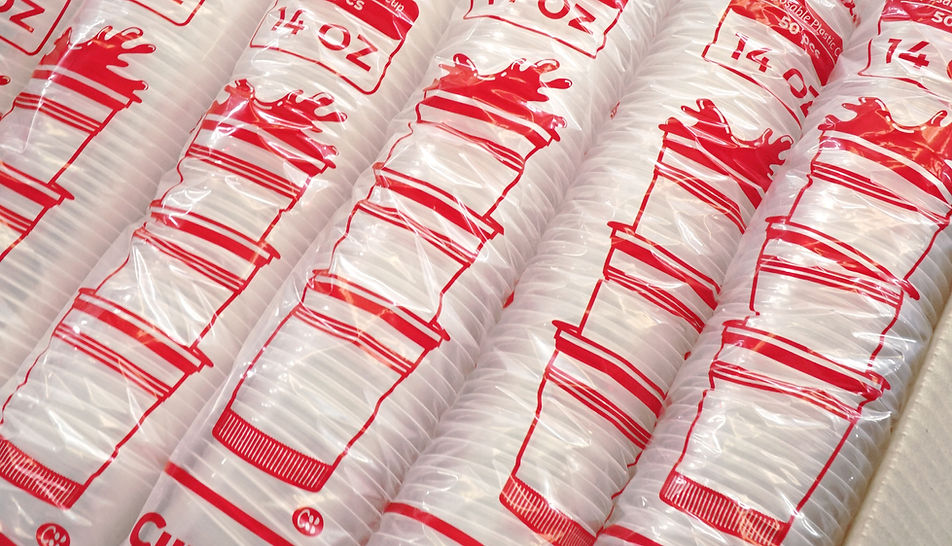
Examine the rim together with its closure
Keep the cup and closure as a reference pair, recording the name or code of each rather than only the cup. A general diameter does not fully describe the rim profile, edge shape, or way the closure meets the cup. Ask the relevant team which dimensions and checks are needed. Do not force a lid into position to make a photograph look convincing. Record looseness or unexpected seating as observations without immediately assigning a cause. Replacing the cup while retaining an old closure creates a changed pair that needs another review.
Separate removable lids from sealing requirements
State the intended closure type: a removable lid, a material used in sealing, or an option still under discussion. Do not assume all types work with the same cup. For sealing requirements, provide the equipment identity and the closure-material information actually available. This article does not prescribe temperature, pressure, or process time because settings cannot be transferred from an unrelated example. Compatibility needs competent evaluation. If equipment has not yet been selected, say so explicitly, allowing the supplier to discuss the unresolved requirement before an order is based on an incorrect machine assumption.
Describe the contents without assuming material suitability
Identify the drink and intended handling conditions, then request documents applicable to the product under discussion. Clarity, stiffness, colour, or a logo does not establish its material or use limits. Do not extend information about one variant to an entire cup family. Attach any special business requirements as matters for review rather than statements that the product meets them. Connect the use description and material documents to the same cup and closure codes, preventing the team from evaluating an item different from the one eventually ordered.
Assess opening separately from closing
Opening a package is a different question from fitting its closure. Identify the eventual user and how the product will be presented. Any opening aid or particular closure feature should be stated as a design requirement needing confirmation. Do not promise that a cup is spill-proof, easy for everyone to open, or suitable for particular conditions without relevant evaluation. Keep observations from closing, movement, and opening separate in the sample record. This prevents a single opening experience from being treated as evidence that the entire closure system has been approved.
A worked comparison between two business needs
Consider a hypothetical team seeking cups for water closed before distribution and another preparing drinks when customers order. Both mention a similar volume. The first still needs to discuss its cup, closure material, and equipment as a system. The second still needs to explain presentation and its lid pairing. Do not combine the orders because one number matches. Create separate requirement lines and ask the product team whether an option genuinely addresses both. This example describes a comparison method, not a customer's production process, an available variant, or an offer for a particular product.
Use a decision table that separates evidence
Create columns for the requirement, sample code, supporting document, open question, and decision. Put the requested volume in the requirement column and the catalogue figure in the evidence column with its source. Give the lid or sealing material its own identity. Separate a provisional decision from approval issued by the responsible person. If the cup changes, do not copy an approved status from the earlier row. Connect the revision to the new sample. The table supports discussion across teams without replacing product examination, process validation, or documents required for your business.
Route the enquiry through the relevant product page
The Cave Mekar Group directory distinguishes packaged-water cups from plastic cups as procurement categories. Start with the category that best explains the initial need, and say when you are comparing both. The plastic-cup page highlights the relationship between cup, closure, and sealing process. That reference frames the question; it does not establish identical specifications across all catalogue cups. The group team can route the discussion to the appropriate company. Confirm the variant, documents, quantity, price, and delivery destination in the actual quotation before selecting an order.
Review the choice when a component changes
A change to the drink, cup, lid, sealing material, or equipment should be identified before reusing an earlier decision. Record what changed and what remains the same, then ask the relevant people which further checks are needed. Do not assume an earlier sample result applies automatically to a new pairing. Keep the reference code and date with the decision so buyers, operators, and suppliers discuss the same combination. This keeps the discussion concrete: the need, the example examined, the evidence available, and the questions still requiring resolution.
Keep samples from different offers separate
When comparing two suppliers or revisions, store each cup and closure pairing separately with a code card. A lid left on a desk should not automatically be paired with a cup from another group. Record who supplied the example and which document describes it. If its identity has become detached, mark it unidentified until confirmation is available. Physical separation helps prevent a discussion based on a combination that was never offered. Once the identities are clear, photograph the complete pair and connect that photograph to the relevant decision record.
| Comparison | Record | Confirm |
|---|---|---|
| Contents | Drink type | Variant documents |
| Closure | Pair codes | Complete sample |
| Process | Equipment | Relevant evaluation |
Product context and enquiry routing: Cave Mekar Group product directory.
Plastic-cup selection context.
Bliplastik catalogue. @cavemekargroup.
Frequently Asked Questions
Does equal capacity mean cups are interchangeable?
No. Closure pairing, rim shape, and process requirements need examination.
Can every cup use the same lid?
No. Confirm the cup and closure combination with the correct samples.
Does this guide provide sealing-machine settings?
No. Process settings require relevant evaluation.
Does a photograph establish material identity?
No. Request information and documents for the variant being discussed.
When should the choice be reviewed?
When the cup, closure, contents, sealing material, or equipment changes.